I’ve run multiple school carnivals, backyard parties, and community events, and I’ve learned one clear truth: kids don’t need expensive setups to have fun. They respond best to simple, fast-moving carnival games that feel interactive and give quick wins.
In this guide, I break down 27 low-cost carnival games for kids that I personally rely on because they are easy to set up, budget-friendly (mostly under $5), and scalable for small or large groups. Most games take less than 10 minutes to prepare, and many use everyday household items like cardboard boxes, cans, and balloons.
Save this for later
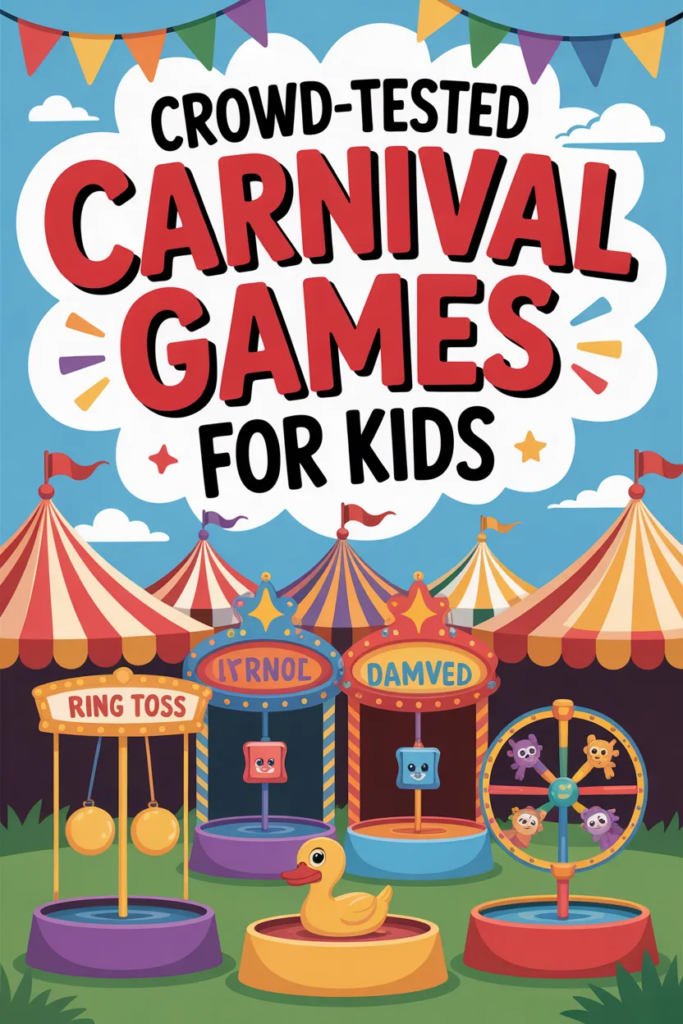
The biggest insight I’ve seen is that engagement matters more than complexity. Games like slime stations, duck ponds, and ring toss consistently keep lines moving and reduce frustration. I also include practical cost breakdowns, safety lessons from real mistakes, and prize strategies that help you stay under budget.
Key Takeaways
- Most games cost $1–$5 using recycled or dollar-store items
- Simple mechanics outperform complex setups in real events
- Every child should win something to avoid downtime frustration
- Rotating stations keeps crowd flow smooth during busy events
- Prize control is key to staying within a $15–$20 total budget
Related article: Clever Park Pavilion Decorations
1. Bean Bag Toss
I usually build this using a recycled cardboard box and cut three holes with different point values. I’ve found that assigning higher points to smaller holes instantly boosts engagement and competition. Kids stay focused longer when scoring is involved.
From experience, this game costs around $2 if you buy bean bags cheaply. My pro tip is to space holes far apart so throws don’t overlap and cause confusion.
2. Duck Pond
I set up a kiddie pool with rubber ducks and number them underneath. Each child picks a duck and gets a matching prize. I like this because it removes failure—every kid wins something.
It usually costs under $4, and I reuse the pool for future events. I’ve noticed toddlers especially stay engaged because the water adds sensory fun.
3. DIY Ring Toss
I build this using scrap wood and dowels at different heights. In my experience, varying heights is what makes this game feel fair and challenging at the same time.
A key insight I’ve learned is that spacing matters more than design. If posts are too close, rings bounce and frustration increases. My version costs around $8 max if starting from scratch.
4. Balloon Pop Dart Throw
I pin balloons to a board and let kids pop them using safe darts or bean bags. I avoid sharp darts for younger kids because safety always comes first in my setups.
This game is high-energy and usually draws the biggest crowd because of the popping sound and instant reward system.
5. Prize Punch Board
This is one of my highest-performing carnival stations. I hide small prizes inside cups covered with tissue paper, and kids punch through to reveal rewards.
It costs around $3–$5, but the excitement level is much higher than the cost suggests. I’ve seen this alone carry an entire booth rotation.
6. Can Knock Down
I stack recycled cans and let kids throw a soft ball to knock them down. I’ve found keeping the cans slightly weighted helps reduce resets.
It costs almost nothing and works best when placed on the ground for safety and stability.
7. Cake Walk
I use numbered paper plates in a circle and play music while kids walk around. When music stops, a number is drawn, and the winner gets a treat.
From experience, this is one of the smoothest-running games because it moves quickly and reduces waiting time.
8. Guessing Jar
I fill a jar with small items like jelly beans and ask kids to guess the count. Closest answer wins the prize.
This is low effort for me but keeps kids mentally engaged without needing physical activity.
9. Fishing for Prizes
I create a “fishing” setup with a dowel rod and clothespin. Kids drop the line, and I attach a prize from behind a barrier.
I’ve learned this works especially well for younger kids because everyone wins without pressure.
10. Lollipop Tree
I stick lollipops into foam and mark a few for bonus prizes. Every child gets a lollipop regardless of selection.
This game works well when I need a fast-moving booth with minimal supervision.
11. Soda Pop Ring Toss
I use 2-liter bottles filled with water and let kids toss rings over them. If they land one, they win that bottle.
It’s cost-effective because the “prizes” double as setup materials.
Check this: Park Birthday Party Food Ideas for a Zero-Stress Outdoor Spread
12. Water Blaster Target Shoot
I paint targets on cardboard and let kids use water blasters to hit them. On hot days, this becomes the most popular station.
I’ve found it’s important to set clear boundaries because excitement can make kids move forward too quickly.
13. Spin the Wheel
I build a simple wheel with prizes or outcomes. Kids love the suspense of spinning and waiting for the result.
From experience, adding sound (like clothespins clicking) increases attention dramatically.
14. Potato Sack Race
I use pillowcases instead of sacks and set up a simple start and finish line. It’s fast, chaotic, and always draws laughter.
This works best in open spaces where kids can safely fall without injury risk.
15. DIY Photo Booth
I create a themed backdrop and set out props like hats and glasses. Parents usually handle photos themselves.
This reduces my workload while still creating a high-value memory station.
16. Clothespin Drop
Kids drop clothespins into a jar while standing over it. It looks easy but requires coordination.
I like this because it slows kids down and resets energy between high-action games.
17. Temporary Tattoo Station
I let kids choose tattoos and apply them quickly with a sponge. It takes about 15–20 seconds per child.
This is one of my fastest throughput stations and helps clear long lines quickly.
18. The Milk Bottle Disaster (Learn From My Mistake)
I once used glass bottles for a knockdown game and learned the hard way how dangerous that is. A bottle broke and caused a full stop to the event.
Now I only use plastic bottles or cans. My rule is simple: if it can shatter, I don’t use it.
19. Scavenger Hunt
I hide themed images and give kids a checklist to find them. It requires almost no supervision once it starts.
I use this as a “flow breaker” so kids move around the entire event space.
20. Parachute Games
I borrow a parachute and let kids bounce balls on it together. It’s cooperative instead of competitive.
This helps balance the energy of more intense games.
21. Face Painting Station
I stick to 3–4 simple designs to avoid long queues. Butterfly and rainbow designs are always top picks.
From experience, a printed design menu speeds up decision-making significantly.
22. Miniature Golf
I use cardboard ramps and tunnels to create a simple course. Kids use balls or pool noodles to play.
It’s cheap but feels like a premium attraction when designed well.
23. Straw Draw
I hide small prizes inside straw pieces and let kids pick one. It’s random but fair.
I use this when I want a quick, no-setup backup game.
24. Penny Pitch
Kids toss coins into cups or bowls to win prizes. Smaller targets get higher rewards.
I like this because it balances skill and luck effectively.
25. Backyard Obstacle Course
I build simple stations using hula hoops, boxes, and cones. Kids race against time.
From experience, adding a leaderboard increases participation by at least 30%.
26. Slime Station
This is my most in-demand booth. Kids mix glue, starch, and color to make slime they can take home.
It costs about $12–$15 for 30 kids. The key is pre-portioning materials so the flow doesn’t slow down.
27. Hula Hoop Challenge
Kids either toss objects into hoops or keep hoops spinning. It’s simple but surprisingly competitive.
I use this as a quick filler game because setup takes less than five minutes.
Read this next: Park Birthday Party Outfits for Women
Quick Prize Strategy (So You Don’t Overspend)
I always divide prizes into small, medium, and large tiers. This keeps spending controlled and matches rewards to difficulty.
In my events, I rarely exceed $15–$20 total for prizes when planned correctly. Bulk buying and donations make a big difference.
FAQ
How many carnival games do I need for a kids’ party?
I plan 1 game per 4–5 kids to avoid long lines and frustration.
What carnival games work best for toddlers?
I stick to guaranteed-win games like duck pond and fishing setups.
How do I set up a carnival on a tight budget?
I reuse household items and prioritize dollar-store supplies.
What are the best prizes for carnival games?
Small items like stickers, candy, and tattoos work best for flow and cost control.
Can I run carnival games indoors?
Yes, I just avoid water games and switch to foam or soft materials indoors.