Motherhood has been one of the most rewarding parts of my life, but it has also tested me in ways I never expected. Between recovering after birth, caring for a baby, managing my home, and trying to look after my own health, I quickly realized I couldn’t do everything alone. Asking for help wasn’t a weakness—it became one of the smartest decisions I made.
Many mothers experience similar struggles. According to the World Health Organization (WHO), around 1 in 5 women develop mental health challenges during pregnancy or after childbirth. Research also shows that mothers with strong emotional and practical support are less likely to experience postpartum depression, chronic stress, and relationship problems.
The biggest lesson I learned is that having the right support system changes everything. Whether that support comes from healthcare professionals, family members, other mums, or trusted community services, every bit of help makes motherhood feel more manageable.
What You’ll Learn in This Guide
In this article, I share the support systems that made the biggest difference in my experience as a mother. I’ll explain how healthcare professionals, parenting groups, government services, trusted organizations, and loved ones helped me feel more confident and less overwhelmed. I’ll also share practical tips that any mum can start using today.
Save this for later
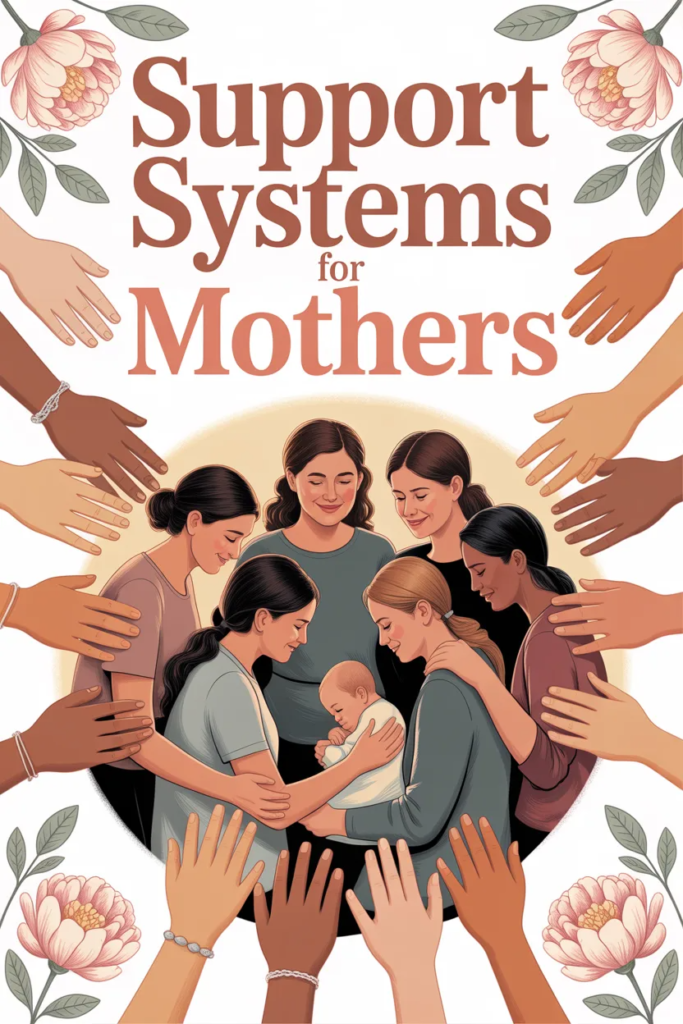
Key Takeaways
- No mother should feel like she has to do everything alone.
- Professional healthcare support starts during pregnancy and continues after birth.
- Parent groups provide practical advice and emotional reassurance.
- Family and friends often become the strongest daily support network.
- Looking after your mental health benefits both you and your baby.
- Asking for help early is a sign of strength, not failure.
Related article: How To Prevent Stretch Marks During Pregnancy
Local Supports from the Government for Mothers
One of the first things I appreciated during pregnancy was the support available through local healthcare services. My midwife answered questions that often kept me awake at night, explained every stage of pregnancy clearly, and helped me understand what was normal and when I should seek medical advice. Having someone experienced guide me made a huge difference to my confidence.
I also found that many public hospitals offer free or low-cost parenting classes before birth. These sessions usually cover labour, breastfeeding, newborn care, safe sleeping practices, baby first aid, and recovery after delivery. Instead of relying on random advice online, I learned practical skills from qualified professionals.
Another valuable resource for me was my local Child and Family Health Centre. The support didn’t stop once my baby arrived. Nurses monitored my baby’s growth, answered feeding questions, checked developmental milestones, and offered advice whenever I felt unsure. Those regular check-ins gave me reassurance during the first year of motherhood.
One class that stood out was introducing solid foods. I learned when babies are developmentally ready, how to safely introduce new foods, and ways to reduce choking risks. That guidance helped me feel prepared instead of anxious when it was time to move beyond milk feeds.
Something I truly respected was how healthcare professionals cared about more than just physical health. During several appointments, they privately asked how I was coping emotionally, whether I felt supported at home, and if I had concerns about my mental health or relationships. Those conversations reminded me that a mother’s emotional well-being matters just as much as her baby’s health.
Pro Tip
I always recommend accepting every free health check, parenting class, or community appointment offered during pregnancy and after birth. Even if you think you already know the basics, each visit gives you another opportunity to ask questions, build confidence, and connect with professionals who genuinely want to help.
Encourage Mothers to Connect
One of the best decisions I made as a new mum was reaching out to other mothers. Before having my baby, I thought I could figure everything out on my own. It didn’t take long to realize that talking to people who were going through the same stage of life gave me reassurance, practical advice, and the confidence to keep moving forward.
There were days when I questioned everything—from feeding and sleep routines to whether my baby was developing normally. Speaking with other mums helped me understand that many of these worries are common. Hearing their experiences reminded me that there isn’t one perfect way to parent, and every family finds what works best for them.
I also discovered that parenting groups are about much more than asking questions. They create a space where I could celebrate small milestones, share difficult days, and learn from people with different experiences. Those conversations often taught me things that books and websites simply couldn’t.
Today, many mothers connect both online and in person. Local playgroups, community parenting programs, Facebook communities, WhatsApp groups, and parenting apps make it easier than ever to find support. While online advice can be helpful, I always try to rely on qualified healthcare professionals whenever medical concerns come up.
Connecting with other mothers also helped improve my emotional well-being. Research has shown that social support can lower stress levels and reduce feelings of loneliness after childbirth. Even a simple conversation with someone who understands what you’re experiencing can make a difficult day feel much easier.
One thing I learned quickly is that comparison can steal your confidence. Every baby reaches milestones differently, and every mother has unique circumstances. Instead of comparing myself with others, I started using parenting communities to learn, encourage others, and remind myself that progress looks different for every family.
If you’re naturally shy, don’t worry. You don’t need to become everyone’s best friend. I started by introducing myself to one mother at a local baby class, and that small conversation eventually led to lasting friendships. Sometimes all it takes is saying hello to someone who understands exactly what you’re going through.
Ways I Connected with Other Mothers
- Joined local parenting and baby groups.
- Attended community playgroups and baby activities.
- Participated in online parenting communities.
- Used trusted parenting apps to connect with mums nearby.
- Stayed in touch with friends who were also raising young children.
- Asked experienced mothers for practical advice without feeling embarrassed.
Pro Tip
I found that the most helpful parenting groups focus on encouragement rather than judgment. Choose communities where mothers openly share both their successes and struggles. A supportive group should leave you feeling more confident, not more anxious.
Public Resources
Alongside family and parenting groups, I also relied on trusted public resources whenever I needed reliable information. The internet contains endless parenting advice, but not all of it is accurate. I found that government websites, healthcare organizations, and respected parenting charities provided evidence-based guidance that I could trust.
Whenever I had questions about pregnancy, breastfeeding, child development, vaccinations, sleep, or nutrition, I preferred using reputable organizations instead of random social media posts. Having access to information reviewed by healthcare professionals helped me make informed decisions with greater confidence.
Some trusted resources many mothers find helpful include:
- Beyond Blue – Mental health support for anxiety, depression, and emotional well-being before and after childbirth.
- Raising Children Network – Evidence-based advice covering pregnancy through the teenage years.
- Pregnancy, Birth and Baby – Professional health information and access to maternal child health nurses.
- Australian Breastfeeding Association – Breastfeeding education, support, and practical guidance.
- MumSpace – Resources focused on maternal mental health and emotional well-being.
- MindMum – Tools designed to improve confidence, relationships, and emotional resilience during early motherhood.
I also learned that reliable information doesn’t replace professional medical advice. Whenever my concerns involved my baby’s health or my own recovery, I always contacted my healthcare provider rather than relying solely on online information.
Pro Tip
Save the websites and phone numbers of trusted parenting organizations before your baby arrives. When unexpected questions come up during those busy newborn weeks, you’ll already know exactly where to find reliable information.
Support from Your Loved Ones
No support system has made a bigger difference in my life than the people closest to me. Healthcare professionals and parenting groups gave me knowledge, but my family and friends helped me get through the everyday challenges that come with raising a child. Their encouragement reminded me that I didn’t have to carry every responsibility on my own.
My partner became one of my biggest sources of support. Sharing daily tasks like feeding, changing nappies, bedtime routines, or simply giving me time to rest helped reduce both physical and emotional exhaustion. Small acts of teamwork made our home feel calmer and strengthened our relationship during a demanding stage of life.
I also learned that being honest about my feelings was important. There were days when I felt tired, overwhelmed, or unsure of myself. Instead of keeping everything inside, I started talking openly with my partner, parents, siblings, and close friends. Those conversations often gave me comfort, practical advice, and a reminder that difficult days don’t last forever.
Support doesn’t always mean someone solving your problems. Sometimes it’s having someone who listens without judging, checks in with you regularly, or offers to help with meals, shopping, or watching the baby for a short time. Those simple gestures can make a huge difference when you’re adjusting to motherhood.
My closest friends also became part of my support network. Even those without children offered emotional support by listening, encouraging me, or simply spending time together. Staying connected with people outside of parenting helped me feel like myself, not just “mum.”
I also realized that asking for help is not a sign of weakness. Many mothers feel pressure to handle everything independently, but accepting support often leads to better physical health, improved mental well-being, and a more positive family environment. Looking after yourself allows you to care for your child with more patience and energy.
If talking face-to-face feels difficult, writing down your thoughts can be helpful. I’ve found that putting my feelings into words made it easier to explain what I needed. Whether through a conversation, text message, or journal, expressing emotions is healthier than carrying them alone.
Practical Ways Loved Ones Can Help
- Share household responsibilities.
- Take turns caring for the baby.
- Prepare meals during busy weeks.
- Offer emotional support without judgment.
- Encourage regular rest and self-care.
- Check in regularly instead of waiting to be asked.
- Help with older children or daily errands when needed.
Pro Tip
I stopped waiting until I felt completely overwhelmed before asking for help. Letting family and friends know exactly what I needed—whether it was an hour of rest, help with groceries, or someone to talk to—made it much easier for them to support me.
Conclusion
Motherhood has taught me that strength isn’t about doing everything by myself. It’s about recognizing when I need support and allowing others to help. From healthcare professionals and parenting groups to trusted public resources and the people I love most, every source of support has helped me become a more confident and healthier mother.
Every family’s situation is different, and there’s no single formula for raising a child. What matters most is building a support system that works for your own needs. Even one trusted person, one helpful community, or one reliable healthcare provider can make a meaningful difference during challenging moments.
If you’re feeling overwhelmed, please remember that you’re not alone. Millions of mothers experience similar emotions, and support is available. Reaching out today could be the first step toward making motherhood feel a little lighter and a lot more enjoyable.
Frequently Asked Questions
Why is having a support system important for mothers?
A strong support system helps reduce stress, improves mental health, and provides practical assistance during pregnancy and after childbirth. Mothers with reliable support often feel more confident and better prepared to manage daily parenting challenges.
Check this: How To Treat Leg Pain During Pregnancy
Who should be part of a mother’s support system?
A mother’s support network can include her partner, family members, close friends, healthcare professionals, parenting groups, community organizations, and trusted online communities. Every family builds a support system differently based on their needs.
How can I find support if I don’t have family nearby?
I recommend joining local parenting groups, community programs, baby classes, or trusted online communities. Healthcare providers can also connect you with local services and support groups designed for new parents.
When should I ask for professional help?
If feelings of sadness, anxiety, hopelessness, or overwhelming stress continue for more than two weeks or begin affecting your daily life or your ability to care for yourself or your baby, it’s important to speak with a healthcare professional as soon as possible.
Can online parenting groups really help?
Yes, online communities can provide emotional support, practical parenting tips, and reassurance from mothers with similar experiences. However, I always verify medical advice with qualified healthcare professionals before making health-related decisions.