I’ve planned and hosted multiple outdoor park birthday parties, and one thing is clear: parks consistently beat indoor venues on cost, flexibility, and stress. Instead of paying high per-child fees for trampoline parks or play centers, I’ve been able to run full parties for a fraction of the price while giving kids more freedom to play naturally.
In this guide, I’m breaking down 19 outdoor park birthday party ideas that actually work in real life. These include structured games like scavenger hunts and relay races, simple setups like playground-only parties, and themed stations like camping setups and art corners. Most ideas take under 30 minutes to set up and rely on basic, low-cost supplies.
Save this for later
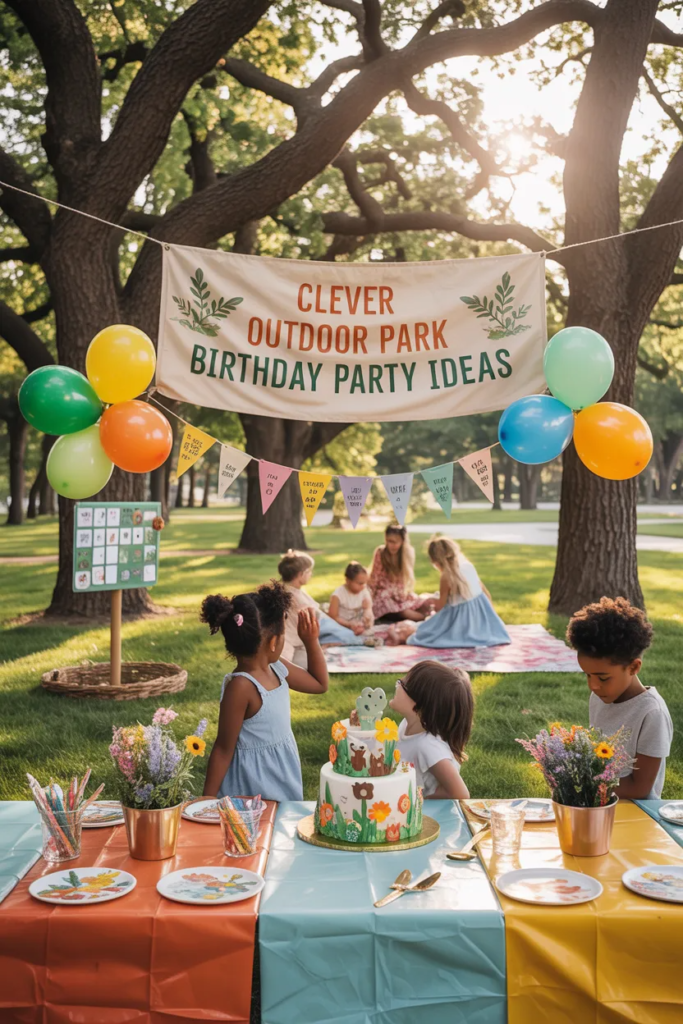
Across different age groups, I’ve found that park parties perform best when activities are optional rather than rigid. Kids naturally split between playground play, group games, and food breaks. That flexibility is what makes these parties feel smooth instead of chaotic.
Key Takeaways
- Park parties typically cost $50–$150 vs $300–$600 indoors
- Most setups take 10–30 minutes and use basic supplies
- Best results come from flexible, optional activities
- Works for ages 2–12 when activities are adjusted properly
- Parks already provide space, shade, and built-in entertainment
Related article: Fun Park Birthday Party Ideas
1. The Playground Takeover Party
This is the simplest format I’ve used, and it still gets the best feedback. I usually arrive early, set up a food table, add a few balloons, and let the playground handle everything else.
Kids naturally rotate between swings, slides, and climbing areas without needing direction. I just assign zones for food and gifts so things stay organized.
From experience, this works best for ages 2–10 because the equipment already scales by ability level. It also keeps my setup cost extremely low, usually under $50.
2. Nature Scavenger Hunt With Printed Checklists
I use scavenger hunts when I want structured activity without heavy setup. I create simple lists based on the actual park layout, like “smooth rock” or “leaf bigger than your hand.”
I split kids into small teams and give them clipboards and bags. A 20–25 minute timer keeps it focused and prevents wandering.
One thing I’ve learned: adding one “impossible item” makes it more fun. Kids spend ages looking for things like a “purple leaf,” which keeps engagement high.
3. Field Day Olympics
This setup turns a park into a mini sports day. I usually run 4–5 stations like sack races, sponge relays, and egg-and-spoon runs.
I learned quickly that short stations (around 5 minutes each) work better than long rotations. It keeps energy high and avoids boredom.
Typical cost stays around $20–$25 if you reuse household items like buckets and spoons.
4. Bubble Bonanza Station
This is my go-to “calm zone.” I set up bubble solution, wands, and sometimes a bubble machine.
It consistently keeps mixed-age groups busy for 20–40 minutes without structure. Toddlers and older kids both enjoy it for different reasons.
I usually place it away from food to avoid spills and crowding.
5. Park Picnic Party With a Grazing Table
Instead of ordering food, I build a simple grazing table. I include fruit, sandwiches, crackers, and easy snacks in separate sections.
This setup usually feeds 15 kids and a few adults for around $40–$60. It also reduces picky-eating issues because kids can choose freely.
One practical tip: I always cover food with mesh domes because ants and wind are the biggest issues outdoors.
6. Water Balloon Battle Royale
I only use this in warm weather, but it’s one of the most memorable activities. I prep 100–200 self-sealing water balloons in advance.
Kids naturally organize into teams, and the activity usually runs for 30–60 minutes without intervention.
The key rule I enforce: no face shots and a clear “dry zone” near food to avoid chaos.
7. Sidewalk Chalk Art Gallery
This is one of the cheapest activities I run. A bucket of chalk is enough for 10–15 kids.
I assign small pavement sections as “art zones” and later turn it into a mini gallery walk.
It works well as a transition activity between more active games.
8. DIY Obstacle Course Using Park Features
Most parks already have 50% of an obstacle course built in. I just add cones, hula hoops, and simple props.
I usually design a loop with crawling, jumping, balancing, and sprint sections. Kids can repeat it multiple times to beat their own time.
This is one of the best high-energy options for ages 6–12.
Also read: Park Birthday Party Outfits for Women
9. Freeze Dance + Musical Statues
This is a no-cost activity I use when I need instant engagement. A speaker and playlist are enough.
Instead of elimination rules, I often use silly “freeze poses” so no one feels left out.
It usually runs 15–20 minutes before kids naturally move on.
10. Camping-Themed Park Party
I’ve used this theme for evening parties, and it always gets strong reactions. I set up tents, blankets, and a fake campfire using logs and lights.
We do simple activities like storytelling and s’mores assembly.
It works especially well for ages 5–10 because it feels like a real experience, not just games.
11. Capture the Flag
This is my most reliable group game for older kids. I split them into two teams and use simple flags like cloth or bandanas.
Once they understand the rules, the game runs itself for 30–45 minutes.
It performs best in large open parks with trees or obstacles.
12. Treasure Hunt With Buried Prizes
I pre-hide small prizes around the park and create a basic map.
Kids work in pairs to find items like stickers, candy, or small toys.
I avoid this for younger kids under 5 because they struggle without direct guidance.
13. Face Painting Station (Volunteer-Run)
Instead of hiring someone, I usually ask a teen or parent volunteer.
With a basic kit and a printed design sheet, each face takes 3–5 minutes.
I always manage a queue because it can get crowded quickly.
14. Kickball Tournament
Kickball is one of the easiest group sports for mixed ages. I use cones if bases aren’t available.
Games usually run 3–4 innings depending on time.
Adults often join in, which makes it more fun and less structured.
15. Myth-Busting: “Park Parties Are Only for Toddlers”
I hear this often, but it’s not accurate. The issue isn’t the park—it’s the activity choice.
Older kids enjoy competitive games like capture the flag or scavenger hunts far more than indoor play zones.
When I design age-appropriate activities, park parties consistently outperform indoor venues.
16. Parachute Games
A simple play parachute gives multiple game options like “mushroom,” “popcorn,” and color runs.
It works well for groups of 8–12 kids and requires almost no setup.
It also photographs well, which many parents appreciate.
17. Art Party With Take-Home Canvases
I set up a painting table with washable paints and small canvases.
Kids paint their own artwork and take it home instead of receiving goodie bags.
This reduces waste and creates a built-in party favor.
18. Piñata in the Pavilion
I always hang the piñata securely and mark a safety zone around it.
It takes about 10 minutes of activity but delivers high excitement.
I avoid hard candy to reduce cleanup and choking risks.
Read this next: Park Shelter Birthday Party Ideas That Look Way More Expensive
19. The “Leave It All to the Park” Minimalist Party
Sometimes I skip structured games entirely. I just set up food, cake, and let the playground handle everything.
This works best for toddlers or very mixed-age groups.
It’s the lowest stress option and often the smoothest overall experience.
Final Insight
After running multiple park parties, I’ve found that simplicity wins. The more I rely on the park’s natural space and reduce forced structure, the better the experience becomes for both kids and adults.
The biggest mistake I see is over-planning. A few strong activities plus free play consistently outperform heavily scheduled parties.