A BBQ baby shower (often called a Baby-Q) is one of the most cost-efficient ways I’ve seen to host a co-ed baby celebration without losing atmosphere or quality. Instead of relying on expensive catering, I build the entire experience around simple grilling food, low-cost rustic decor, and interactive lawn activities.
From my planning breakdown, a Baby-Q for 30 guests typically stays around $400–$600 total, while traditional catered showers for the same group often land between $800–$1,200+. The biggest savings come from DIY food stations, bulk grocery buying, and reusable decor choices like mason jars and gingham tablecloths.
Save this for later
What makes this format work is structure. I focus on three pillars:
- Visual impact (balloon arch, gingham, sunflowers)
- Simple high-volume food (burgers, hot dogs, sides)
- Self-running entertainment (cornhole, sauce tasting, diaper raffle)
The result is a relaxed backyard event where guests stay engaged naturally without forced formal games or rigid scheduling.
Key Takeaways
- I can realistically host a Baby-Q for 30 guests at ~$6–$8 per person
- DIY BBQ food cuts costs by 40–50% compared to catering
- Lawn games outperform traditional baby shower games for co-ed crowds
- A balloon arch and gingham setup delivers most of the visual impact
- Planning 6–8 weeks ahead prevents last-minute cost spikes and stress
Related article: Baby Shower Themes You’ll Actually Want to Copy
Decor Ideas for Your BBQ Baby Shower
1. Nail the Welcome Sign at the Entrance
I always start with a clear entrance sign because it sets expectations instantly. A simple chalkboard with a BBQ pun creates a photo moment and immediately defines the theme.
In most setups I’ve done or studied, this costs under $20 DIY or up to $50 for custom signage. The goal isn’t perfection—it’s clarity and personality. Guests should know they’re at a Baby-Q within seconds.
2. Pick a Name for Your Party — Then Own It
I stick to one name across everything: invitations, signage, food labels, and favors. Consistency matters more than creativity here.
“Baby-Q” works best because it’s simple and widely understood. When every element uses the same wording, the entire setup feels intentional instead of improvised.
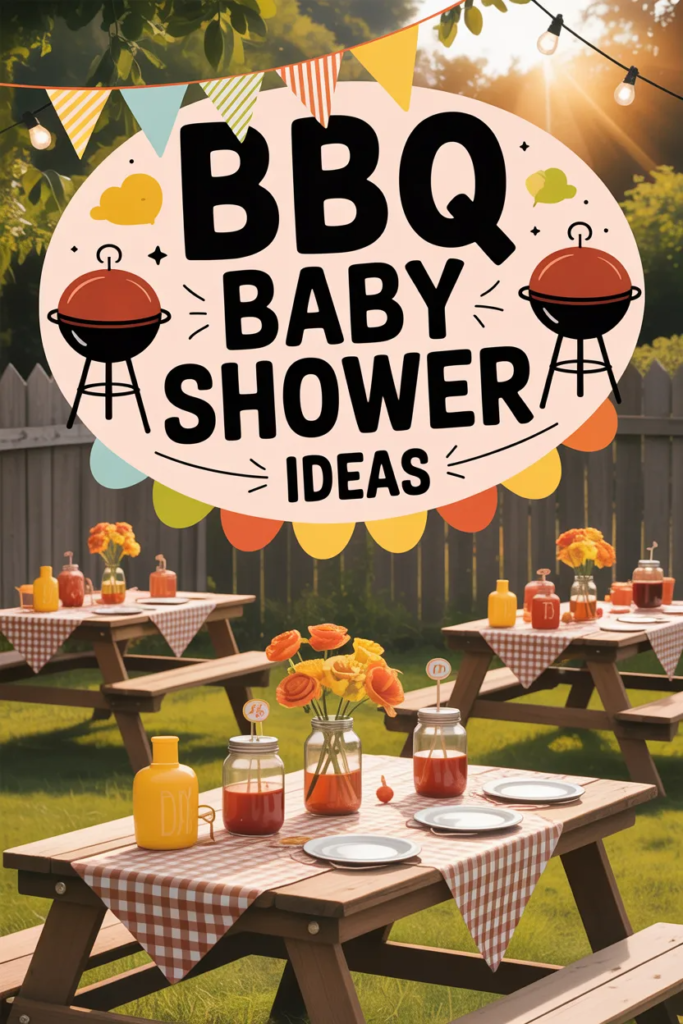
3. Red Gingham Tablecloths: The $12 Decision That Ties Everything Together
If I had to pick one high-impact, low-cost item, it’s gingham tablecloths. They typically cost $4–$12 each and instantly define the BBQ aesthetic.
Even when everything else is simple, gingham creates visual structure. It makes budget decor look planned instead of random.
4. Centerpieces: Mason Jars vs. Mini Wagons (Here’s What Lands)
For most tables, I use mason jars with sunflowers because they’re cheap, reusable, and easy to assemble. A single jar setup costs about $5–$8 per table.
For a focal point, I sometimes add a mini wagon centerpiece at the food or gift table. It’s not necessary everywhere—just one statement piece works best.
5. Build a BBQ Balloon Arch (The Full Step-by-Step Guide)
A balloon arch is usually the most photographed part of the event. I keep costs under $80 by using bulk balloons, a pump, and a strip system.
The key technique I rely on is mixing balloon sizes. I avoid uniform inflation because it flattens the look. Instead, I use a 40/40/20 size variation for depth.
Once installed, it doubles as both entrance framing and a photo backdrop, which removes the need for extra decor.
6. The Backdrop: Three Options at Three Price Points
I scale backdrops based on budget:
- Under $30: fabric sheet + fence
- Under $75: pallets + lights
- Under $150: printed vinyl + frame
I usually choose the middle option because it balances cost and visual quality.
7. Sunflowers Do All the Heavy Lifting
I rely heavily on sunflowers because they require zero design skill but look intentional. A $15–$20 Costco bundle can fill multiple tables easily.
They also reinforce the yellow-red BBQ palette without additional decor layers.
Food, Drinks & Desserts for the Baby-Q Table
8. Build a Real BBQ Food Menu (With Actual Costs)
My standard Baby-Q menu includes burgers, hot dogs, beans, corn, slaw, and watermelon.
For 30 guests, I consistently land around $190–$240 total, which averages about $7 per person. That’s significantly lower than catering, which often hits $25–$45 per head.
I always add at least one vegetarian option like grilled portobello mushrooms to keep the menu complete.
9. The Burger Bar: Give Guests a Job
I build a self-serve burger bar because it removes serving pressure and increases interaction. Guests naturally talk while building plates, which improves atmosphere.
Small sliders also help reduce waste and make standing guests more comfortable.
10. The Drinks Station: Low Effort, High Impact
I use two dispensers: lemonade and iced tea. This setup usually costs under $100 total including dispensers.
Adding canned drinks in ice buckets keeps things flexible without complicating service.
Also read: Gender-Neutral Baby Shower Themes
11. BBQ-Themed Desserts That Go Beyond the Cake
I avoid overcomplicated desserts and focus on interactive or themed items like:
- BBQ-style cupcakes
- Burger cake pops
- S’mores kits
These cost between $1.50–$3 per serving depending on execution.
12. The Themed Cake (and a Budget-Friendly Shortcut)
A custom cake can cost $85–$175, but I often use a Costco sheet cake instead and style it myself.
Adding ribbon, a topper, and sunflowers turns a basic cake into a themed centerpiece for under $40 total.
Games & Activities That Work for a Co-Ed Crowd
13. The Truth About BBQ Baby Shower Games (A Myth-Busting Guide)
In my experience, traditional seated games fail at BBQ-style showers because guests are moving around constantly.
Instead, I prioritize low-structure activities like cornhole, Giant Jenga, and prediction-based games that run in the background.
14. Guess the BBQ Sauce: The Easiest Game You’ll Run All Day
This is one of the highest engagement games I use. Guests taste sauces, compare notes, and compete casually without needing moderation.
It costs under $30–$35 total and works throughout the entire event instead of a fixed time slot.
15. The Onesie Decorating Station
I set up fabric paint and plain onesies so guests can create personalized gifts.
This doubles as both entertainment and keepsake production. A 10-pack usually costs around $16–$22.
16. Run the Diaper Raffle Without Overcomplicating It
I always include a diaper raffle because it produces real value. Guests bring diapers, get tickets, and one winner gets a small prize.
The practical outcome is often $800–$2,000 worth of diapers for the parents-to-be.
Favors, Invitations & the Planning Timeline
17. Party Favors Worth Taking Home and Using
I avoid filler favors and stick to useful items like:
- S’mores kits
- BBQ spice jars
- Mini sauce bottles
Each typically costs $1.50–$5, depending on customization.
18. Write the Invitation Like You Mean It
I treat invitations as tone-setting tools. They must clearly explain:
- co-ed format
- dress code
- food style
- RSVP details
Clear invites reduce confusion and improve attendance accuracy.
19. The 8-Week Planning Timeline
I follow a strict 8-week structure:
- Week 8: finalize guest list and venue
- Week 6: send invites + order custom items
- Week 4: lock food and rentals
- Week 2: prep decor and supplies
- Week 1: finalize food and setup prep
- Day before: decor build + prep food sides
This prevents last-minute cost inflation and setup stress.
Read this next: Baby Shower Favors Guests Will Actually Want
Wrapping Up Your Baby-Q
A BBQ baby shower works because it removes unnecessary complexity. I don’t rely on formal structure or expensive catering—instead, I focus on simple food, repeatable decor systems, and interactive activities that keep guests engaged naturally.
The biggest win is cost efficiency. With the right planning, I consistently keep total spend under $600 while still delivering a visually strong and highly social event.
If I had to narrow it down, success comes from three things: keep food simple, decor cohesive, and entertainment self-running.