When I first noticed a dark line running down my pregnant belly, I wondered if it was normal. If you’ve recently seen the same change, you’re not alone. Linea Nigra is one of the most common skin changes during pregnancy, and for most women, it’s completely harmless.
This dark line appears because pregnancy hormones affect the skin’s natural pigment. While some women barely notice it, others develop a darker and more visible line. In most cases, it fades naturally after childbirth without any treatment.
Save this for later
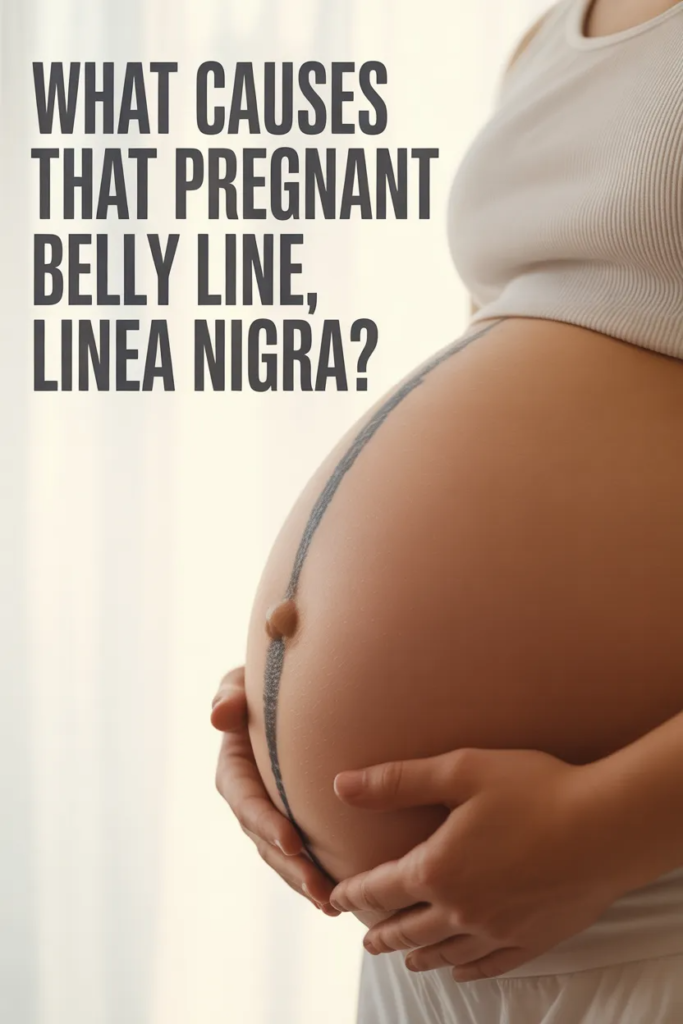
In this guide, I’ll explain why Linea Nigra happens, who is more likely to develop it, when it appears, how long it lasts, and whether any of the common pregnancy myths about it are actually true.
Key Takeaways
- Linea Nigra is a normal skin change during pregnancy.
- Pregnancy hormones increase melanin production, making the line darker.
- It usually appears during the second trimester.
- Women of every skin tone can develop Linea Nigra.
- The line cannot be prevented, but it usually fades after delivery.
- There is no scientific proof that Linea Nigra predicts your baby’s gender.
- If the line remains for several months after birth, it often continues fading gradually as hormone levels return to normal.
Related article: First Trimester Pregnancy Favorites I Can’t Live Without
Who gets Linea Nigra line?
Not every pregnant woman develops Linea Nigra, and that’s perfectly normal. From what I’ve learned through medical research and real pregnancy experiences, every body responds differently to hormonal changes.
Women with medium or darker skin tones often notice the line more because their skin naturally contains more melanin, the pigment responsible for skin color. However, lighter skin doesn’t mean you’re immune. Many women with fair complexions also develop a noticeable pregnancy line.
Doctors estimate that around 75% of pregnant women experience Linea Nigra at some point during pregnancy, although its darkness and length vary from person to person.
Before pregnancy, most people already have a thin line called the Linea Alba. It’s usually so light that it’s almost impossible to see. During pregnancy, rising hormone levels stimulate pigment-producing cells, causing this invisible line to darken into what we call Linea Nigra.
Pro Tip
If your Linea Nigra looks darker during one pregnancy than another, don’t worry. Skin pigmentation changes differently with every pregnancy, even for the same woman.
Causes for Linea Nigra Line
Although researchers haven’t identified one exact cause, pregnancy hormones are considered the biggest reason this dark line develops.
As pregnancy progresses, my body—and every pregnant woman’s body—produces much higher levels of hormones like estrogen, progesterone, and melanocyte-stimulating hormone (MSH). These hormones encourage the skin to produce more melanin, making certain areas appear darker.
It’s also common to notice darkening around the nipples, underarms, inner thighs, and even the face. This condition, known as melasma, often appears alongside Linea Nigra because both are linked to increased pigmentation.
Several factors can make the line more noticeable:
- Increased melanin production during pregnancy
- Hormonal changes, especially higher estrogen and MSH levels
- Genetics and family history
- Naturally darker skin tone
- Greater sun exposure, which can stimulate additional pigment production
Research published by medical organizations shows that pregnancy-related skin changes affect up to 90% of pregnant women, making pigmentation changes among the most common physical changes during pregnancy.
My Experience-Based Advice
I wouldn’t worry about trying to remove or lighten the line while pregnant. Since it’s caused by normal hormonal changes, most treatments won’t stop it from appearing. Instead, I focus on protecting my skin with sunscreen because excessive UV exposure can make pregnancy pigmentation appear darker.
Appearance of the Linea Nigra Line
In my experience, Linea Nigra doesn’t appear overnight. It usually starts as a faint line and gradually becomes darker as pregnancy progresses. Most women notice it during the second trimester, although some see it earlier or later depending on their hormone levels.
The line usually runs from the pubic bone to the belly button, but in some pregnancies, it extends up toward the rib cage. Its width, color, and length are different for everyone, so there isn’t a “normal” appearance that applies to every pregnancy.
If you have a darker skin tone, your Linea Nigra may look more noticeable because of higher melanin levels. On lighter skin, the line may stay thin and light brown throughout pregnancy.
As your baby grows, stretching skin and hormonal changes often make the line easier to see. It’s completely normal if the color becomes darker during the third trimester.
Quick Facts
- Most women notice it between weeks 13 and 24 of pregnancy.
- The line is usually ¼ to ½ inch wide.
- It can be light brown, dark brown, or nearly black.
- Some women never develop it at all.
Pro Tip
I avoid comparing my pregnancy with others because every woman’s hormones, skin type, and genetics affect how Linea Nigra looks.
Is Linea Nigra a Gender Predictor?
One of the most common pregnancy myths I’ve heard is that Linea Nigra can reveal whether you’re having a boy or a girl. While it’s a fun tradition to guess, medical research doesn’t support this idea.
According to the old wives’ tale:
- If the line stops at the belly button, you’re having a girl.
- If it continues above the belly button toward the ribs, you’re having a boy.
Although many parents enjoy making these predictions, scientific studies have found no evidence that the length, darkness, or position of Linea Nigra is connected to a baby’s sex.
I’ve heard plenty of stories where women had a dark line and delivered girls, while others had barely visible lines and welcomed boys. These experiences show that Linea Nigra simply isn’t a reliable gender predictor.
If you’re excited to learn your baby’s sex, an ultrasound performed at the appropriate stage of pregnancy or genetic testing provides much more accurate results than skin changes.
Expert Insight
The accuracy of pregnancy myths about gender is no better than random guessing—about 50%, which is simply chance.
Can you Prevent Linea Nigra Line?
Unfortunately, there isn’t a proven way to prevent Linea Nigra. Since it’s caused by natural hormonal changes during pregnancy, creams, lotions, and home remedies cannot stop it from appearing.
I remind myself that this line is simply another sign that my body is adapting to support a growing baby. Like many pregnancy changes, it’s temporary and usually fades after delivery.
One thing I do pay attention to is protecting my skin from the sun. Ultraviolet (UV) rays can increase melanin production, making pigmentation appear darker than it otherwise would.
Simple habits that may help reduce additional darkening include:
- Applying a broad-spectrum sunscreen when spending time outdoors.
- Wearing loose clothing that covers the belly during prolonged sun exposure.
- Staying hydrated to support overall skin health.
- Following a balanced diet rich in vitamins and minerals.
While these habits won’t prevent Linea Nigra, they can help protect your skin throughout pregnancy.
Also read: Pregnancy Symptoms for a Girl
When Does this Pregnancy Line go away?
For most women, Linea Nigra begins fading after childbirth as pregnancy hormone levels gradually return to normal. I wouldn’t expect it to disappear immediately because the body needs time to recover.
Many women notice significant fading within a few months after delivery, although for some, a faint line may remain for 6 to 12 months. This timeline is completely normal and varies from person to person.
If you’re breastfeeding, hormone levels may take longer to stabilize, which can delay the fading process. Patience is usually the best approach because the pigmentation often continues to lighten naturally.
After pregnancy, gentle skin care may help improve your skin’s appearance. I prefer using mild exfoliation a couple of times each week and moisturizing regularly rather than trying harsh bleaching products that can irritate sensitive skin.
Pro Tip
If your Linea Nigra remains unchanged for a long time after pregnancy or you’re concerned about unusual skin changes, it’s a good idea to speak with your healthcare provider or dermatologist for personalized advice.
Stretch Marks around the Linea Nigra Line
It’s common to notice stretch marks developing near the Linea Nigra as your belly expands. While the two often appear together, they happen for different reasons. Linea Nigra is caused by increased skin pigmentation, while stretch marks develop when the skin stretches faster than its collagen and elastin fibers can adapt.
Research suggests that up to 90% of pregnant women develop stretch marks, especially during the third trimester. Genetics, weight gain, age, and skin elasticity all play a role in whether they appear.
Although no product can guarantee the prevention of stretch marks, I found that keeping my skin well moisturized helped reduce dryness and itching as my belly grew. Staying hydrated and gaining pregnancy weight gradually, as recommended by my healthcare provider, may also support healthier skin.
Here are a few habits that can help keep your skin comfortable during pregnancy:
- Moisturize your belly daily with a pregnancy-safe cream or lotion.
- Drink plenty of water to help maintain skin hydration.
- Eat foods rich in vitamin C, vitamin E, zinc, and protein, which support healthy skin.
- Avoid scratching itchy skin, as it can increase irritation.
- Follow your healthcare provider’s recommended pregnancy weight gain.
Expert Tip
If you’re shopping for stretch mark products, remember that expensive creams aren’t always better. Consistent daily moisturizing is generally more important than the brand you choose.
Conclusion
From everything I’ve learned, Linea Nigra is one of the most common and harmless skin changes during pregnancy. While it may look surprising at first, it’s simply your body’s natural response to changing hormone levels and increased melanin production.
Every pregnancy is different. Some women develop a dark, noticeable line, while others barely see one or never develop it at all. None of these experiences indicate that something is wrong.
The good news is that Linea Nigra almost always fades after pregnancy, although it may take several months for the pigmentation to lighten completely. Until then, I see it as another reminder of the incredible changes my body makes during pregnancy.
If you ever notice unusual skin changes, severe itching, pain, or anything that doesn’t seem normal, don’t hesitate to contact your healthcare provider. They can determine whether your symptoms are part of a healthy pregnancy or need further evaluation.
Frequently Asked Questions (FAQs)
Is Linea Nigra normal during pregnancy?
Yes. Linea Nigra is a completely normal pregnancy-related skin change caused by hormonal shifts that increase melanin production. It doesn’t harm you or your baby.
When does Linea Nigra usually appear?
Most women notice it during the second trimester, although it can develop earlier or later depending on individual hormone levels.
Does everyone get Linea Nigra?
No. While it’s very common, not every pregnant woman develops a visible Linea Nigra. Genetics, skin tone, and hormone levels all influence whether it appears.
Can Linea Nigra predict my baby’s gender?
No. There is no scientific evidence linking the length, color, or position of Linea Nigra to your baby’s sex. It’s simply a popular pregnancy myth.
Can I make Linea Nigra disappear faster?
There isn’t a proven way to speed up the fading process. Most cases improve naturally after pregnancy as hormone levels return to normal. Gentle skincare and sun protection may help reduce additional pigmentation.
Check this: Honest Guide to Having a Belly Only Pregnancy Every Time
Should I worry if my Linea Nigra stays after pregnancy?
Usually, no. A faint line can remain for several months, especially if you’re breastfeeding. However, if you’re concerned about persistent pigmentation or other skin changes, consult your healthcare provider for advice.