Hey there, mama. I’m Jennifer — a child health specialist with over 20 years of experience supporting families through pregnancy, birth, postpartum recovery, and early childhood milestones. I’ve stood beside hundreds of women in delivery rooms, guided them through birth plans, and helped them process unexpected interventions with confidence and calm.
Save this for later
If you’re preparing for childbirth, it’s completely normal to feel a mix of excitement and uncertainty. One topic that sometimes brings up questions is the use of forceps during labor. Let’s walk through this together so you feel informed, empowered, and supported.
By the end of this article, my goal is for you to understand when and why forceps may be used — and to feel confident trusting both your body and your medical team.
What are Forceps, and When Are They Used?
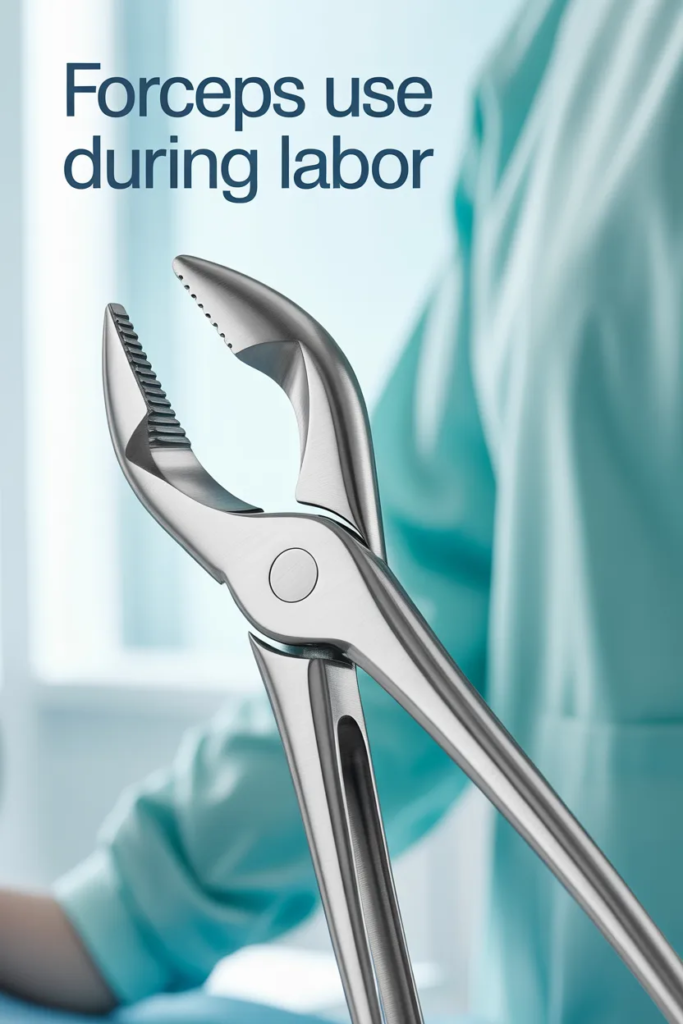
Forceps are specialized medical instruments that resemble curved spoons or tongs. They are carefully designed to fit around a baby’s head to assist in guiding the baby through the birth canal during delivery.
In my professional experience working alongside obstetric teams, forceps are never used casually. The decision is made only when specific medical circumstances indicate that assistance would support a safer birth.
Forceps may be considered when:
- Labor has been prolonged, particularly during the pushing stage
- The mother is exhausted and unable to push effectively
- There are signs of fetal distress
- The baby needs help descending through the birth canal
The priority is always the safety and well-being of both mother and baby.
Do Doctors Still Use Forceps During Labor?
Yes, doctors do still use forceps — though far less frequently than in past decades.
Over the last 20 years, I’ve seen a significant shift toward more conservative and evidence-based approaches in obstetrics. Today, forceps are typically used only when the benefits clearly outweigh the risks.
In certain situations, forceps can help guide the baby’s head and provide gentle traction during contractions, allowing for a timely vaginal delivery. However, their use requires a highly skilled and experienced provider.
Alternative methods may include:
- Vacuum extraction (which uses suction to assist delivery)
- Cesarean birth, depending on the circumstances
Because forceps can increase the risk of maternal perineal tears or minor facial marks on the baby (which usually resolve quickly), healthcare providers carefully evaluate each case individually.
The key takeaway? Forceps are not routine — they are purposeful and considered.
When Might Forceps be Considered?
Forceps may be considered when additional support is needed to achieve a safe vaginal birth.
In my years supporting laboring mothers, the most common scenarios include:
- A prolonged second stage of labor
- Maternal exhaustion after extended pushing
- Ineffective pushing despite coaching and position changes
- Non-reassuring fetal heart rate patterns
Before recommending forceps, the medical team evaluates:
- Baby’s position
- Cervical dilation (must be fully dilated)
- Engagement of the baby’s head
- Overall maternal and fetal stability
This is a clinical decision made with careful assessment — not urgency without thought.
The Benefits of Forceps Assistance
When used appropriately, forceps can offer meaningful benefits.
From a clinical perspective, I’ve seen forceps:
- Shorten the pushing stage
- Help avoid an emergency cesarean
- Reduce prolonged fetal stress
- Support a safe vaginal birth when progress stalls
In certain births, timely assistance can prevent further complications that may arise from extended labor.
It’s important to understand that in skilled hands, forceps are a tool — not a setback.
Safety and Expertise
I always reassure mothers that forceps require advanced training. Not every provider performs forceps deliveries regularly. Those who do have completed extensive obstetric training and follow strict medical guidelines.
Before using forceps, providers confirm:
- Full cervical dilation
- Ruptured membranes
- Proper fetal positioning
- Adequate pain management
From my two decades in maternal-child health, I can confidently say that when performed by experienced clinicians, forceps deliveries are carefully controlled and monitored.
Your provider’s goal is never speed for convenience — it is safety.
Communicating and Trusting Your Healthcare Team
One of the most important lessons I teach expecting mothers is this: communication builds confidence.
If forceps are mentioned during labor, you have every right to ask:
- Why are they being recommended?
- What are the alternatives?
- What are the benefits and risks?
Informed consent matters deeply. As a mother, you deserve to understand what is happening and why.
In my experience, women who feel included in decision-making often process their birth experience more positively — even when it includes interventions.
Trust grows through transparency.
How to Avoid Forceps During Labor
While forceps are sometimes necessary, there are proactive steps that may reduce the likelihood of needing assisted delivery. I’ve guided many mothers through preparation strategies that support smoother labors.
Here’s what I recommend based on both clinical knowledge and real-life birth support experience.
Foster a Healthy Pregnancy:
A healthy pregnancy lays the groundwork for smoother labor.
Attend regular prenatal appointments. Follow nutritional guidance. Manage conditions like gestational diabetes or hypertension carefully. Stay hydrated and well-rested.
I’ve seen firsthand how consistent prenatal care supports better labor outcomes.
Prepare Physically and Mentally:
Preparation makes a tremendous difference.
Consider childbirth education classes. Practice breathing exercises. Learn relaxation and visualization techniques.
Prenatal exercises such as walking, swimming, and prenatal yoga can improve stamina and pelvic flexibility — both helpful during pushing.
Mentally preparing for flexibility in your birth plan also reduces stress if labor shifts unexpectedly.
Optimize Labor Progression:
Movement during early labor can support fetal positioning and descent.
I often encourage:
- Upright positions
- Gentle walking
- Using a birthing ball
- Warm showers for comfort
Creating a calm, dimly lit, supportive environment can also help regulate stress hormones, which influence labor progression.
Effective Labor Positions:
Positioning matters more than many women realize.
Positions that open the pelvis and use gravity effectively include:
- Squatting
- Hands-and-knees
- Side-lying
- Lunging
In births I’ve supported, simple position changes have helped avoid unnecessary interventions.
Patience and Trust in the Process:
Labor doesn’t follow a strict clock.
One of the most powerful tools during childbirth is patience. When mother and baby are stable, allowing time for progress can prevent rushing into interventions.
Surround yourself with a supportive team that respects your preferences while prioritizing safety.
Seek Informed Consent:
You are an active participant in your birth.
Always ask questions. Understand your options. Make decisions based on balanced medical advice.
Informed mothers feel empowered — and empowerment changes birth experiences.
You’ve Got This!
Childbirth is transformative. It is physical, emotional, and deeply personal.
Forceps, while less common today, remain an important medical tool when circumstances require assistance. Understanding their purpose removes fear and replaces it with clarity.
After 20 years working in maternal and child health, I can tell you this with confidence: the vast majority of birth decisions are made with one priority — the safe arrival of your baby and your well-being.
Every birth story is unique. Whether your delivery is intervention-free or includes medical assistance, what matters most is that you and your baby are healthy.
If you have concerns about forceps or any other aspect of labor, speak openly with your healthcare provider. Education builds confidence — and confident mothers navigate birth with strength.
You are stronger than you think. And whatever your birth story looks like, it is still beautifully yours.
Educate Yourself About Forceps and More
One thing I’ve learned in my 20 years as a child health specialist is this: education reduces fear.
When mothers understand what might happen during labor — including tools like forceps — they approach birth feeling steadier and more confident. Knowledge doesn’t mean expecting complications. It means being prepared for possibilities.
I always encourage expectant parents to:
- Take a comprehensive prenatal class
- Review common labor interventions
- Discuss birth preferences early with their provider
- Understand both vaginal and cesarean delivery scenarios
Learning about assisted delivery methods ahead of time allows you to process the information calmly — not during an intense contraction.