If there’s one season of life that is equal parts breathtaking and overwhelming, it’s those first weeks with a newborn. I’ve walked alongside countless mothers during baby showers, “sip and sees,” and first birthday celebrations — and I can tell you this: the postpartum period shapes everything that comes after.
Knowing how to support a new mom isn’t about grand gestures. It’s about thoughtful, practical help and steady emotional reassurance. The right support can turn exhaustion into confidence, isolation into connection, and stress into shared joy.
Save this for later
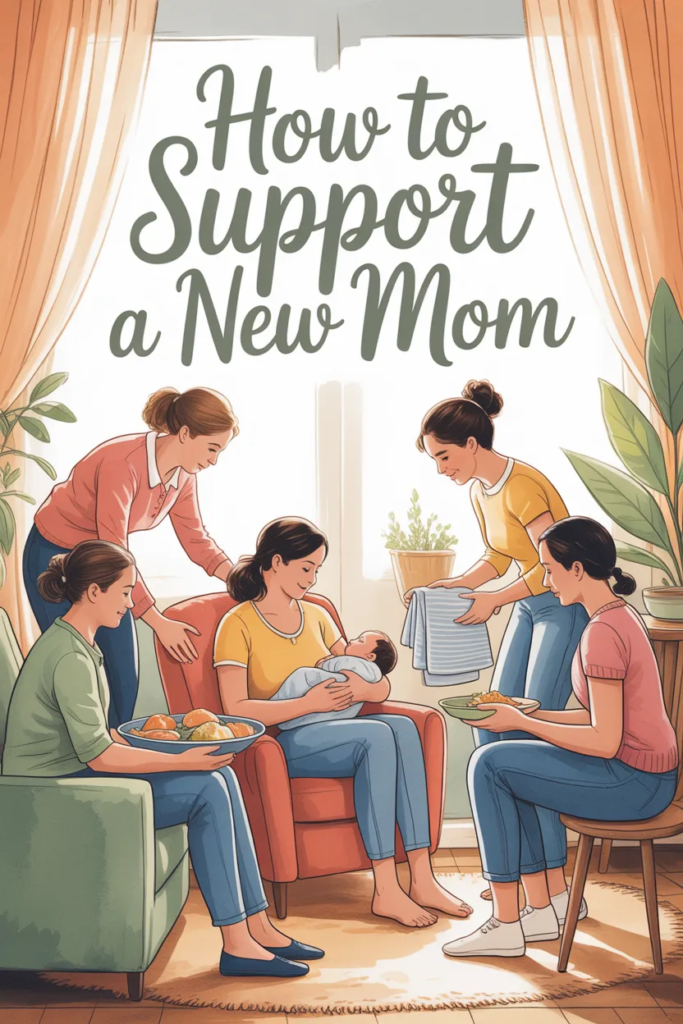
Whether you’re supporting a first-time mom, a seasoned mama with older kids, or planning a gathering around a new arrival, here’s exactly how to show up in ways that truly matter.
#1 Offer Practical Help
Practical support is the love language of new motherhood.
When a baby arrives, even basic tasks feel monumental. Dishes multiply. Laundry seems endless. Meals become an afterthought. Offering hands-on help immediately lowers her mental load — and that’s the real gift.
Why this works
New moms are physically recovering, hormonally adjusting, and learning their baby’s cues. When you remove even one task from her plate, you give her energy back for bonding and healing.
What to do (and how to do it right)

Cook meals — strategically.
Instead of asking, “What can I bring?” show up with freezer-friendly dishes in disposable containers. Label reheating instructions clearly. Think protein-rich, easy-to-eat meals: soups, casseroles, breakfast burritos.
Micro-transformation tip: include pre-cut fruit or healthy snacks she can grab during 2 a.m. feedings.
Do the laundry — completely.
Don’t just wash it. Fold it. Put it away. Ask where baby items go. That extra step makes the help meaningful instead of adding another task.
Tidy high-traffic areas.
Focus on the kitchen sink, bathroom counters, and living room surfaces. These are the visual stress points. A clear counter instantly makes a home feel calmer.
Run specific errands.
Text: “I’m heading to Target — what do you need?” Be precise and time-bound. It’s easier to answer a direct offer than a vague one.
Refill her water bottle.
Especially if she’s breastfeeding. It sounds small, but hydration impacts energy and milk supply. This tiny act communicates care without words.
Common mistake to avoid
Don’t hold the baby while she cleans. That’s not support — that’s a role swap. If you’re there to help, handle the tasks so she can sit, eat, or rest.
This level of practical help works beautifully for postpartum visits, baby shower follow-ups, or sibling-friendly gatherings where you can occupy older kids while tidying up.
#2 Provide Emotional Support
Even the most prepared mom can feel uncertain in the early weeks.
Learning how to support a new mom emotionally is just as important as practical help. Hormones fluctuate dramatically after birth, and sleep deprivation amplifies everything.
Why emotional support matters
Validation reduces anxiety. When a mother feels seen and affirmed, her confidence grows. Confidence directly impacts bonding and decision-making.
How to truly listen
Be present. Put your phone away. Let her talk without interrupting with advice.
Say things like:
- “That sounds really hard.”
- “You’re navigating this with so much love.”
- “It makes sense you’d feel that way.”
Notice the difference? These statements affirm rather than instruct.
Sharing your own experience — gracefully
If you’re a mom yourself, use “I” language.
Instead of:
“You should try swaddling differently.”
Say:
“When my baby wouldn’t sleep, I found tighter swaddling helped — but every baby’s different.”
This keeps the focus on her journey, not yours.
Social media encouragement
Commenting on her baby photos with warmth and affirmation actually matters. Many new moms quietly look for reassurance online. A thoughtful message can boost her morale more than you realize.
Watch for red flags
If she shows signs of postpartum depression — persistent sadness, detachment, hopelessness — gently encourage professional support. Postpartum mental health deserves immediate attention.
Emotional presence is powerful during baby showers, meal drop-offs, and milestone celebrations. Sometimes the most meaningful support is simply staying a little longer to talk.
#3 Help With Childcare
Sleep deprivation is one of the hardest parts of new motherhood.
Offering childcare is one of the most transformative ways to support a new mom — if done thoughtfully.
Why this works
Even a 30-minute uninterrupted shower can reset her nervous system. Short breaks restore patience and energy.
How to offer it correctly
Be specific:
“I’d love to hold the baby for an hour so you can nap.”
Or:
“Can I take the older kids to the park?”
If she hesitates, respect it. Some moms aren’t ready to separate. Support means honoring boundaries.
Sibling-friendly support
When older children are involved, attention divides quickly. Offering to entertain siblings allows her to bond peacefully with the newborn.
Micro-transformation idea: bring a simple craft kit or coloring pages. Structured activities prevent chaos and create calm.
Childcare support is especially meaningful during postpartum weeks and during events like small welcome-home gatherings where moms can feel overstimulated.
#4 Provide Resources and Information
Information overload is real — but so is misinformation.
If a new mom is asking questions, she’s looking for clarity, not judgment.
Why curated resources help
Reliable education reduces fear. Knowing how to swaddle correctly or recognize normal newborn sleep patterns builds confidence.
What to recommend
Encourage professional, evidence-based guidance. For example, some families appreciate structured newborn classes like those taught by experienced nurses such as Hilary Erickson, BSN-RN, known as The Pregnancy Nurse®.
When recommending resources:
- Offer, don’t insist.
- Share what you personally found helpful.
- Let her decide.
Local support options
Suggest:
- Lactation consultants
- Postpartum doulas
- Parenting groups
- Pediatric nurse hotlines
If you’re planning a baby shower, consider including a printed list of vetted local resources in a welcome basket. It’s a practical touch that extends support beyond the party.
#5 Offer Companionship
Isolation can sneak up quickly.
Visitors slow down after the first week. Partners return to work. Long days stretch quietly.
Offering companionship helps prevent loneliness from settling in.
Why it works
Connection regulates emotions. A simple walk or cup of tea breaks the monotony of newborn days.
Easy ways to show up
- Invite her for a stroller walk around the block.
- Sit with her during a feeding session.
- Watch a light show together.
No pressure. No expectations. Just shared presence.
Micro-transformation tip: bring bakery muffins or her favorite coffee. A small indulgence turns a regular visit into something special.
Companionship works beautifully for low-key “sip and see” gatherings, where conversation flows gently and older siblings can be included.
#6 Bring Meals or Organize a Meal Train
Food is foundational.
A well-organized meal train can eliminate one of the biggest daily stressors: “What are we eating?”
Why meal trains are effective
Nutrition directly affects recovery, mood stability, and energy. Consistent meals prevent the crash-and-burn cycle common in early postpartum.
How to organize one successfully
- Space meals every other day to avoid overwhelm.
- Ask about dietary restrictions.
- Include breakfast options, not just dinners.
- Avoid excessive packaging she has to return.
Micro-enhancement: include paper goods so she doesn’t face extra dishes.
For baby showers, consider gifting a meal delivery credit or coordinating sign-ups before guests leave. It bridges celebration and real-life support seamlessly.
#7 Encourage Self Care
Self-care in early motherhood isn’t spa days — it’s survival basics.
Remind her that eating, showering, and resting are not luxuries.
Why this matters
A depleted mom cannot pour from an empty cup. Encouraging self-care supports both her mental health and baby’s well-being.
Practical ways to help
- Hold the baby so she can nap.
- Bring nourishing snacks.
- Gift cozy loungewear or quality skincare.
Watch gently for signs of postpartum depression. If something feels off, encourage her to speak with her healthcare provider.
When planning postpartum gatherings, keep them short. Two hours is usually enough. Overstimulation drains energy quickly.
#8 Celebrate Milestones
Newborn milestones feel enormous — even if they’re small on paper.
Celebrating them reinforces joy during an exhausting season.
Why celebration matters
Acknowledging progress builds confidence. It shifts focus from fatigue to growth.
Moments worth recognizing
- First smile
- First successful breastfeeding session
- First pediatric appointment milestone
- First outing as a family
Take candid photos that include older siblings. Often, moms are behind the camera. Capture her holding the baby. Those images become treasured memories.
Micro-transformation tip: bring a small bouquet or pastel cupcakes when visiting during a milestone week. A visual pop of color — soft blush, sage green, baby blue — instantly lifts the atmosphere.
These tiny celebrations lay the emotional groundwork for future gatherings like first birthdays and family traditions.
Learning how to support a new mom isn’t complicated — but it does require intention.
Show up with practical help. Offer emotional steadiness. Respect her choices. Create small moments of beauty in ordinary days.
The postpartum season is fleeting, but the impact of thoughtful support lasts for years. When a mother feels cared for, she carries that strength forward — into bedtime routines, birthday candles, and every milestone ahead.
And that, truly, is the kind of support that changes everything.