Creating your baby registry sounds simple at first. You sit down with a cup of tea, open a registry site, and start adding adorable baby things. Then about twenty minutes in, you realize you have no idea what you actually need versus what just looks cute.
Save this for later
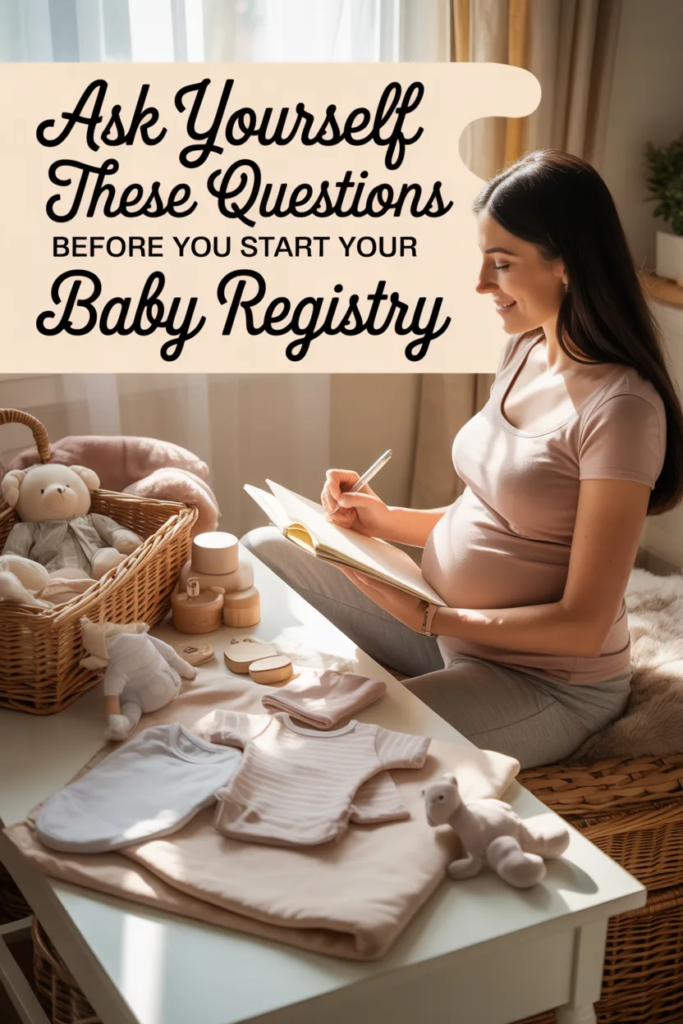
As someone who has helped plan countless baby showers and walked alongside new moms in those final nesting weeks, I can tell you this: a thoughtful baby registry isn’t about getting more stuff. It’s about reducing stress before your baby even arrives. When your registry reflects your real lifestyle, space, values, and support system, those early weeks feel steadier and more manageable.
Before you start clicking “add to registry,” pause and ask yourself these questions. They’ll help you build a baby registry that feels intentional, practical, and deeply supportive.
What essential items will I need for the baby’s first few months?
The newborn phase is beautifully intense. You’ll spend most of your time feeding, changing, soothing, and sleeping in small stretches. Your baby registry should heavily prioritize what supports those rhythms.
In the first few months, you truly need a safe sleep space, a reliable diapering setup, basic feeding supplies, and enough simple clothing to get you through frequent changes. Zip-up sleepers are far more practical than complicated outfits, especially during late-night diaper changes. Soft swaddles, burp cloths, and gentle wipes will get daily use.
One mistake I see often is underestimating how frequently babies go through clothes. Between spit-up and diaper leaks, you may change outfits multiple times a day. Planning for laundry every three or four days instead of daily makes life much easier.
If you want a small visual upgrade without extra effort, choose essentials in a coordinated color palette. Even everyday items feel more organized and calming when they match, and your nursery naturally looks cohesive.
Do I want to focus on practical, everyday items, or are there some special or luxury items I’d like to include?
A strong baby registry balances practicality with a touch of joy.
Most of your registry should include everyday essentials like a crib, stroller, car seat, changing pad, and monitor. These are the items that truly support daily life. But it’s also perfectly fine to include one or two elevated pieces that make you excited for this new chapter.
Maybe that’s a beautifully designed glider where you’ll spend countless feeding sessions, or a stroller that feels smooth and easy to maneuver. Those small upgrades can dramatically improve your experience.
For baby showers especially, variety matters. Some guests feel comfortable purchasing smaller items, while close family members may prefer contributing toward a larger gift. Including a range ensures everyone can participate comfortably.
The key is balance. A registry filled only with high-end items can feel overwhelming to guests, while one with only basics may miss opportunities to elevate your daily routine.
What is my budget for the baby registry?
Even though friends and family will contribute, your budget still matters. Not everything on your baby registry will be purchased by others, and many parents use registry completion discounts to buy remaining items.
Think about what you are comfortable purchasing yourself. Break categories down mentally—nursery furniture, feeding, diapering, travel gear, clothing, and health items. This makes the process feel less overwhelming and helps you prioritize.
A practical strategy is including items across multiple price points. Smaller essentials allow guests to choose something manageable, while higher-priced items can be set up for group gifting. This approach makes your baby registry feel inclusive rather than restrictive.
When your registry reflects realistic financial planning, it removes pressure later.
Will I be using eco-friendly or sustainable products whenever possible?
If sustainability is important to you, your baby registry is a wonderful place to reflect those values.
Organic cotton sleepers, fragrance-free skincare, reusable nursing pads, and responsibly made wooden toys are simple ways to incorporate eco-conscious choices. Cloth diapering or plant-based disposable options are also worth considering if they align with your lifestyle.
That said, new parenthood is demanding. Convenience matters. I often suggest choosing a few key categories to prioritize rather than trying to overhaul everything. For example, focus on organic textiles and gentle skincare while keeping other areas flexible.
Pairing eco-friendly items with natural nursery elements like woven baskets, soft green tones, and light wood accents creates a peaceful atmosphere that feels intentional without being complicated.
What are the specific needs and preferences of my lifestyle and living space?
Your home layout and daily routine should shape your baby registry more than trends ever will.
If you live in a smaller space, compact and foldable items are invaluable. A mini crib, wall-mounted storage, or a stroller that collapses easily can save both space and frustration. In larger homes, you might benefit from duplicate essentials on different floors, such as a second diaper caddy or portable bassinet.
Active families who enjoy outdoor walks should prioritize durable stroller wheels and a comfortable baby carrier. Families who rely on public transportation may prefer lightweight gear that’s easy to maneuver.
One common struggle I see is copying a friend’s registry without considering differences in space or lifestyle. Your registry should serve your home, not someone else’s.
Do I plan to breastfeed, bottle-feed, or both? What supplies will I need for each option?
Feeding decisions shape a significant portion of your baby registry.
If you plan to breastfeed, you’ll likely want a breast pump, nursing bras, milk storage bags, and a comfortable nursing pillow. Small details like nipple cream and extra burp cloths can make a real difference during those early days.
If you plan to bottle-feed, start with a modest number of bottles rather than committing to one brand in large quantities. Babies can be surprisingly particular about bottle shape and nipple flow. You’ll also want a cleaning brush and drying rack.
Many families choose a combination approach. In that case, ensure you have supplies for both systems so transitions feel smooth.
Setting up a small feeding station with neatly organized supplies is a simple micro-change that reduces stress, especially during overnight sessions.
What type of baby gear (stroller, car seat, crib, etc.) best suits my lifestyle and meets safety standards?
Large gear items are some of the most researched—and for good reason. Safety comes first.
Your car seat must meet current safety regulations and fit your vehicle properly. Strollers should match how and where you’ll use them, whether that’s city sidewalks, parks, or travel. Cribs should adhere to up-to-date safety guidelines, and you’ll want to avoid outdated secondhand models.
It’s easy to get distracted by aesthetics, but function and safety should lead the decision. You can always add soft linens or accessories to personalize the look later.
For baby showers, these items are often set up as group gifts, which helps make larger purchases manageable.
Are there any specific brands or products that I trust or prefer?
If you already have positive experiences with certain brands, it’s completely reasonable to include them in your baby registry.
Consistency can simplify life. Staying within one bottle system, for example, prevents compatibility issues. Choosing a brand known for reliable baby monitors or durable strollers can also bring peace of mind.
However, leave room for flexibility. Babies sometimes have preferences of their own, especially with pacifiers or bottles. Starting with smaller quantities helps you test what works before committing.
Am I interested in organic or hypoallergenic baby products?
Newborn skin is delicate. If allergies run in your family or you simply prefer gentler options, organic or hypoallergenic items can be a thoughtful addition to your baby registry.
Fragrance-free lotions, mild detergents, breathable crib sheets, and soft washcloths are practical upgrades. They may seem minor now, but they often prevent irritation and unnecessary stress later.
Creating a small, organized bath or care basket makes daily routines feel calm instead of chaotic.
Are there any cultural or personal preferences that should be reflected in the registry items?
Your baby registry can hold more than just functional items. It can reflect your family’s story.
That might mean including traditional clothing, faith-based books, or décor that honors your heritage. These meaningful pieces often become treasured keepsakes and spark beautiful conversations at baby showers.
Blending practicality with personal identity makes your registry feel warm and intentional.
What clothing sizes and types will the baby need for various seasons and stages of growth?
Babies grow quickly, and many outgrow newborn sizes within weeks. Include a modest number of newborn pieces and slightly more in the 0–3 month range.
Think about the season your baby will arrive in. Lightweight cotton is ideal for warmer months, while cooler seasons call for layered sleepers and cozy fabrics.
Parents often receive many adorable outfits but end up using simple sleepers most. Prioritizing comfort and ease will make daily life smoother.
Will I have a baby shower, and if so, what items should I prioritize for that event?
If you’re planning a baby shower, your registry should reflect that guest experience.
Include a variety of affordable items so everyone can participate comfortably. Diapers, books, swaddles, and smaller essentials are popular choices. Larger items can be reserved for close family or group contributions.
If your shower includes activities like a book-themed request instead of cards, align your registry to support that idea. Thoughtful coordination between your registry and event theme creates a seamless celebration.
Are there any specific colors or themes I’d like to incorporate into the nursery and baby items?
Choosing a simple color palette can dramatically elevate the look of your nursery without increasing cost.
Two or three complementary tones repeated through crib sheets, swaddles, wall art, and storage bins create visual harmony. Soft neutrals paired with one accent color often feel timeless and calming.
Avoid going overly theme-heavy. Instead of large character graphics, consider subtle patterns or textures. This approach keeps the space adaptable as your child grows.
How many of each item do I realistically need, considering laundry frequency and the baby’s needs?
Over-registering can lead to clutter and storage stress.
Instead of thinking in bulk, think in rotation cycles. A manageable number of sleepers, burp cloths, crib sheets, and swaddles is usually sufficient if you plan regular laundry. Duplicates of essentials are helpful, but excessive quantities often go unused.
Being realistic keeps your home organized and your registry intentional.
Have I considered baby healthcare items, such as a baby thermometer, nasal aspirator, and baby-safe medications?
Healthcare items are rarely the most exciting part of a baby registry, but they are some of the most reassuring.
Having a reliable thermometer, a nasal aspirator, and basic infant care tools on hand prevents late-night pharmacy runs. When your baby experiences their first cold, you’ll be grateful these items were already in place.
Preparedness reduces panic, especially for first-time parents.
What type of diapering system (disposable or cloth) do I plan to use, and what supplies are necessary for each?
Your diapering choice affects both budget and daily routine.
Disposable systems require a steady supply of diapers in multiple sizes, wipes, cream, and a disposal solution. Cloth diapering involves an upfront investment in diapers, inserts, and proper laundering supplies.
Some families combine both methods, using cloth at home and disposables while traveling. Building flexibility into your baby registry can make transitions easier.
What are the must-have safety items for baby-proofing the home?
While newborns are stationary at first, mobility arrives quickly.
Outlet covers, cabinet locks, furniture anchors, and baby gates become essential once crawling begins. Adding these items early allows you to prepare gradually instead of rushing once your baby starts exploring.
Guests often appreciate gifting practical safety items that contribute to peace of mind.
Will I need any items for traveling with the baby, such as a travel crib or portable changing pad?
If you anticipate travel or frequent outings, portable gear deserves a place on your baby registry.
A travel crib, compact stroller, and organized diaper bag make day trips and overnight visits far less stressful. Even small details like a foldable changing pad or portable white noise machine can transform the experience.
Preparing in advance allows you to maintain routines outside your home, which can be incredibly grounding during early parenthood.
Are there any sentimental or heirloom items I’d like to include in the registry?
Sentimental items bring heart into your registry.
A keepsake box, memory book, or personalized blanket may not be daily essentials, but they preserve moments you’ll want to remember. These pieces often become cherished long after the newborn phase ends.
Blending functional items with meaningful keepsakes creates a registry that feels both practical and personal.
Have I researched reviews and ratings for the items I’m considering to ensure quality and durability?
Before finalizing your baby registry, take time to read reviews carefully.
Look beyond star ratings and scan for repeated comments about durability, ease of cleaning, safety concerns, or complicated assembly. Patterns in feedback are often more telling than individual opinions.
Doing this research now saves frustration later and ensures your registry includes items that truly hold up during daily use.
Create Your Baby Registry
Starting your baby registry can feel overwhelming, but asking these thoughtful questions transforms it into a steady, intentional process.
When your registry reflects your lifestyle, values, space, and support system, it becomes more than a list. It becomes preparation that reduces stress and increases confidence.
Build it slowly. Adjust as needed. And remember, the goal isn’t to have everything—it’s to have what truly supports you as you welcome your baby.