I use this kids birthday party checklist as a practical planning system to keep everything structured from start to finish. It breaks the entire process into clear time blocks so nothing gets missed, from choosing a theme and guest list to food, games, and post-party cleanup.
The goal is simple: reduce last-minute stress and make party planning manageable. I’ve seen that most party problems come from poor timing, not lack of effort. When tasks are spread across 6–8 weeks, the process becomes smoother and more predictable.
Save this for later
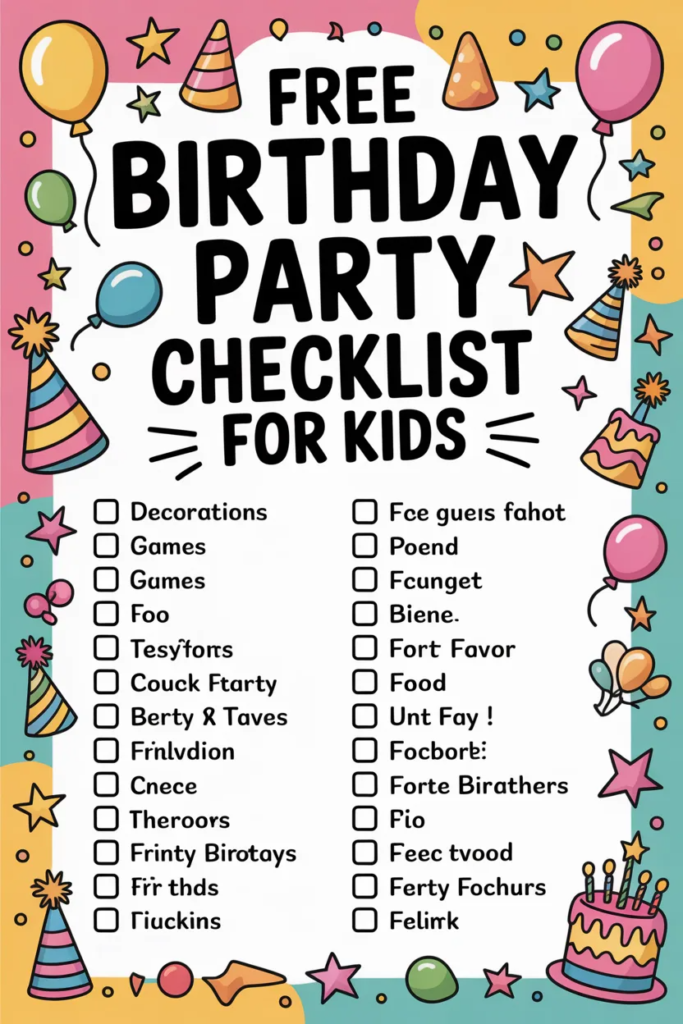
This guide follows a step-by-step timeline so I can plan a complete birthday party without confusion. It covers venue booking, invitations, budgeting, decorations, food prep, activities, and after-party tasks in a structured way that actually works in real situations.
Key Takeaways
- Planning early (6–8 weeks) reduces stress and last-minute spending
- Guest list and theme decisions shape the entire party structure
- Breaking tasks by timeline improves control and budget management
- Food, games, and favors should always match the theme for consistency
- A simple checklist prevents missed tasks and improves execution
Related article: 45 Best Baby Shower Games to Make Your Party Unforgettable
Free Birthday Party Checklist for Kids: The Ultimate Planning Tool
When I plan a child’s birthday party, I focus on two core decisions first: the guest list and the theme. These two choices determine almost everything else—venue, food, budget, and activities.
From experience, smaller but well-organized parties usually work better than large unstructured ones. I also make sure to plan in phases instead of doing everything at once. This reduces cost spikes and decision fatigue.
6–8 Weeks Before the Party
At this stage, I focus on the foundation of the event.
I first decide the party theme based on what the child enjoys—sports, cartoons, games, or outdoor activities. Then I build the guest list because it directly affects venue size and cost.
Next, I select the location. At-home parties are budget-friendly, while rented venues reduce cleanup stress but increase cost. After that, I lock in the date and time early to avoid conflicts with school or weekends.
I also check venue limits such as guest capacity, included services, and setup rules before confirming booking.
Pro tip: I always match theme + venue early because changing either later increases costs and confusion.
4 Weeks Before the Party
This is where planning becomes more detailed and execution-focused.
I send invitations with complete details: date, time, location, RSVP deadline, and contact info. Digital invites help track responses faster.
Next, I plan games and activities aligned with the theme. I also finalize the menu, including snacks, main food, and drinks. Food planning early helps avoid last-minute overspending.
Cake ordering is also important at this stage. I choose either a themed cake or a simple flavor kids enjoy most. I also decide if ice cream or extras will be included.
I then plan party favors. I try to keep them simple, useful, and theme-based instead of expensive.
Finally, I research decorations and any rentals like bounce houses or photo booths.
2 Weeks Before the Party
At this point, I move into execution and preparation.
I purchase all remaining decorations and start any DIY items if needed. I also create a full party timeline so I know how the day will flow.
This includes game order, food timing, cake cutting, and guest arrival flow.
I finalize the menu and prepare a grocery list to avoid forgetting essentials. I also build a music playlist since background music helps control energy levels during the party.
I double-check venue bookings and confirm all arrangements.
1–3 Days Before the Party
This is the preparation phase where everything comes together.
I confirm guest count with the venue or adjust seating at home. I clean and set up the space where the party will take place.
If I’m baking or preparing food, I do it a day before to reduce pressure on party day.
I also collect balloons, finish shopping for food, and complete party bags. I prepare a gift tracking sheet so I don’t miss thank-you notes later.
I also make sure the birthday card is ready and signed by family members.
Day of the Party
On the actual day, I focus on setup and timing.
I charge devices for photos and videos and prepare storage space for drinks and food. I set up decorations, tables, and activity zones early.
If food is being delivered, I confirm timing in advance. I also prepare a simple checklist for gifts so everything is tracked.
Most importantly, I keep the schedule flexible because kids’ energy and timing often change during the event.
End of the Day
Once the party ends, I focus on quick cleanup.
I distribute party favors, pack leftover items, and organize gifts safely. Cleanup is easier when handled immediately instead of delaying it.
I also take a few minutes to relax because party hosting can be physically tiring.
After the Party
After the event, I handle follow-up tasks.
I sort and share photos with family, write thank-you notes, and mail them if needed. I also create a small memory album or digital folder.
This helps preserve the event and also teaches kids appreciation habits.
Meaningful Ways to Celebrate Your Child’s Birthday
Not every celebration needs a large party. I sometimes focus on small family traditions instead.
Simple ideas include letting the child choose dinner, decorating their room, or creating a birthday countdown. These small habits often create stronger long-term memories than expensive setups.
I also recommend doing something personal before or after the party so the day feels more complete.
Birthday Interview
I like doing a short birthday interview each year with my child.
It only takes a few minutes but helps track personality changes over time. I usually ask simple questions about favorite food, friends, hobbies, and goals.
Over time, this becomes a meaningful record of childhood growth that families can look back on.
Birthday Party By Age Group
I always adjust planning based on age because kids’ expectations change quickly.
Younger kids usually prefer simple games and shorter schedules. Older kids and teens prefer structured activities, social time, or themed experiences.
Age-based planning helps avoid overstimulation and keeps guests engaged throughout the party.
Birthday Gift Ideas
Gift selection is easier when I match it with interests instead of trends.
I focus on hobbies like gaming, sports, crafts, or learning activities. Practical gifts combined with fun items usually work best.
I also avoid overcomplicated gifts because kids often value experience over cost.
Check this: 12 Fun Themes for Baby’s 1st Birthday Party
Final Thoughts
From my experience, the best birthday parties are not the most expensive ones—they are the most organized. A structured checklist reduces stress, improves budgeting, and ensures nothing important is missed.
When planning is broken into stages, the entire process becomes easier and more predictable. The goal is always the same: a smooth day where the child enjoys time with friends and family without pressure.