A Winnie the Pooh baby shower works best when you build a vintage-inspired theme using balloon arches, honey jar centerpieces, soft fabric backdrops, and warm lighting. The goal is to create a cozy Hundred Acre Wood feeling through layered décor, simple color palettes, and functional design elements like signage, dessert tables, and guest keepsakes.
Save this for later
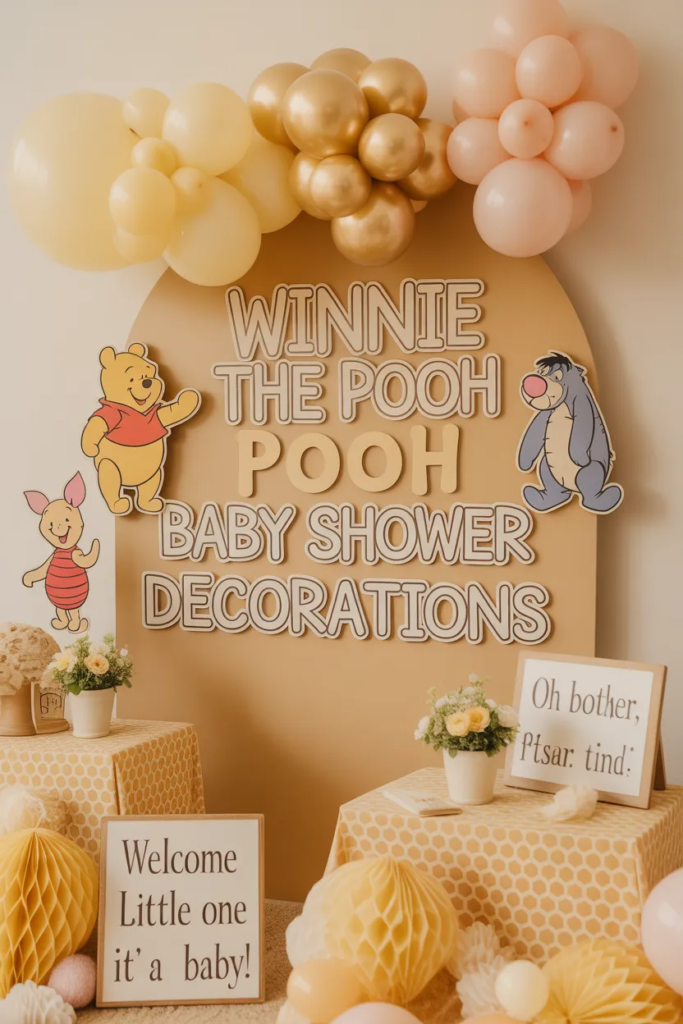
Budget-friendly DIY options can deliver a premium look if planned correctly, and most setups take 5–6 hours of preparation time before the event.
Key Takeaways
- Soft, muted colors (honey gold, cream, sage green) outperform bright cartoon palettes
- Balloon arches and backdrops drive the strongest visual impact
- Mason jar “honey pot” centerpieces are both decorative and functional
- Lighting setup contributes heavily to overall mood (often underestimated)
- Mid-range budgets ($200–350) give the most balanced results
- Setup realistically requires multiple preparation days
Related article: Woodland Baby Shower Theme Cake Ideas
The Balloon Arch That Stops Traffic
From my experience, balloon arches are the single most effective visual anchor for a Winnie the Pooh baby shower setup. I’ve seen that organic-style arches using mixed balloon sizes (small, medium, and large) create a far more natural look than rigid symmetrical designs.
What consistently works is a controlled palette: sage green, cream, tan, and soft gold. When I combined these with eucalyptus branches, the setup immediately felt more natural and less “party store.” Eucalyptus is also cost-efficient in many regions, often under $3 per bunch in local markets or grocery stores.
One practical insight I’ve learned is that balloon density matters more than perfect shape. Gaps can be filled with greenery or smaller balloons instead of trying to over-inflate everything.
Pro tip: Always secure arches with proper anchors. Light wind or indoor airflow can shift them significantly during the event.
Typical cost range:
- DIY setup: $60–80
- Professional setup: $150–250
- Setup time: 2–3 hours
Honey Pot Centerpieces That Actually Make Sense
In my own setups, mason jar centerpieces consistently outperform expensive floral arrangements. They are simple, reusable, and fit the Winnie the Pooh honey theme without feeling forced.
I usually see two effective approaches:
- Floral version: baby’s breath, small roses, or sunflowers in mason jars wrapped with twine and labeled “HUNNY.”
- Functional version: jars filled with honey and used as guest favors.
The key detail most people miss is table height balance. Anything between 8–12 inches works best for conversation flow. Anything taller tends to block visibility and reduce interaction between guests.
Insight: Simple jars with correct labeling often photograph better than complex arrangements because they don’t visually compete with other décor elements.
The Backdrop Situation (And Why You Need One)
Every well-executed Winnie the Pooh baby shower I’ve seen includes a dedicated photo backdrop. Without it, the décor feels scattered and lacks focus.
There are three practical approaches:
- Fabric drape setup: cream or beige fabric with light floral accents
- Balloon wall: color-matched to the main palette for photos
- Rustic pallet wall: wooden base with lights and hanging décor
From a practical planning standpoint, I’ve noticed fabric drapes are the most budget-efficient, while balloon walls provide the highest visual impact for social media photos.
Pro tip: Stability is critical. Weak structures often collapse during peak guest activity if not reinforced properly with zip ties or weighted bases.
Table Settings That Feel Special (Without Destroying Your Budget)
In my experience, table styling is where most budgets get wasted unnecessarily. The strongest setups rely on layering rather than buying themed kits.
A practical formula I’ve used:
- Neutral tablecloth (cream or beige)
- Burlap or linen runner
- White plates with twine-tied napkins
- Small wooden name tags
This combination typically costs around 40% less than full themed sets while looking more refined in photos.
I also recommend limiting each table to three décor elements max. More than that creates visual clutter and reduces overall aesthetic clarity.
Insight: Public domain Winnie the Pooh illustrations can be framed cheaply and used as table accents, often costing under $2 per frame if sourced from thrift stores.
The Dessert Table (Where Expectations Go Wild)
The dessert table is usually the visual centerpiece of the entire event. From what I’ve observed, the most effective setups follow a structured height hierarchy:
- Tall centerpiece (cake)
- Medium stands (cupcakes, cookies)
- Low front-layer items (favors, sweets)
The biggest mistake I’ve seen is overloading colors. If the theme is honey gold and sage green, introducing unrelated bright colors breaks the visual consistency.
A simple buttercream cake with honey drizzle consistently performs better than heavily decorated fondant cakes, both visually and in taste feedback.
Pro tip: Leave intentional empty space. Overfilling reduces focus and makes the table feel chaotic instead of curated.
Signage That Ties Everything Together
From my perspective, signage is one of the most underrated parts of Winnie the Pooh baby shower decorations. It quietly organizes the entire visual flow of the event.
Effective signage typically includes:
- Welcome sign at entry
- Dessert table label
- Gift table direction
- Guest message station
I’ve found that wood-based signage around 18×24 inches works best for visibility. Digital downloads printed locally are also cost-effective, usually under $10 per design.
Insight: Guest message alternatives (like advice cards) tend to hold more emotional value than traditional guest books, which are often forgotten after the event.
Lighting Choices That Change Everything
Lighting is one of the most overlooked elements in baby shower planning. In my experience, it contributes nearly as much to atmosphere as décor itself.
Warm lighting works best:
- String lights for ambient glow
- Flameless candles for table warmth
- Paper lanterns for diffused overhead lighting
I’ve consistently seen that layered lighting setups outperform single-source lighting. Fluorescent lighting should always be avoided because it flattens colors and reduces visual warmth.
Pro tip: Warm white LEDs are reusable and cost-efficient for future events, making them a better long-term investment.
Practical Elements Nobody Mentions (But Everyone Needs)
From real-world setups, practical design elements often determine how smoothly the event runs.
Examples include:
- Gift tracking systems using ribbon displays
- Diaper “honey pot” displays instead of diaper cakes
- Conversation cards to reduce awkward silence
- Budget-friendly take-home favors like honey jars or seed packets
These elements don’t just decorate the space—they solve operational issues during the event.
What About a Modern Vs. Vintage Approach?
In my experience, this decision shapes everything else.
Vintage Pooh style:
- Muted tones
- Storybook illustrations
- Burlap, wood, and soft fabrics
- Works best for formal or mixed-age gatherings
Modern Disney Pooh style:
- Brighter yellows and reds
- Strong character visuals
- More playful tone
- Better for kid-heavy events
I’ve found vintage styling performs better in photos and feels more timeless, while modern styling is more immediately recognizable for children.
The Budget Breakdown (Real Numbers)
Based on practical event planning:
- Ultra-budget ($75–125): DIY-heavy setup, minimal décor, small guest list
- Mid-range ($200–350): Balanced mix of DIY and professional elements (most effective)
- Full-service ($500–800+): Professionally managed décor and styling
From my experience, the mid-range category delivers the best return in visual quality versus effort and cost.
Timeline and Setup Realities
Real preparation time is often underestimated.
- 2 weeks before: finalize theme, order materials
- 3 days before: prepare centerpieces and print materials
- 1 day before: set tables, signage, and lighting
- event day: balloons, flowers, final adjustments
In practice, total setup time usually reaches 5–6 hours even for experienced planners.
Check this: Baby Shower Game Ideas That Won’t Make Your Guests Cringe
What Can Go Wrong (And Your Backup Plans)
From real events I’ve seen, common issues include:
- Balloon deflation or shortage
- Outdoor weather disruptions
- Vendor delays
- Color mismatches in supplies
Backup strategies like air-filled balloon walls, indoor fallback setups, and early vendor confirmation significantly reduce risk.
Insight: Most problems are manageable if you assume at least one element will not go as planned.
Final Thoughts on Making This Actually Happen
From my perspective, the success of Winnie the Pooh baby shower decorations is not about perfection. It’s about emotional tone. When the space feels warm, consistent, and thoughtful, guests remember the experience—not the exact décor items.
I’ve seen simple setups outperform expensive ones when they focus on comfort, lighting, and cohesive color flow. The real goal is to create an environment that feels calm and meaningful, not overly staged.